
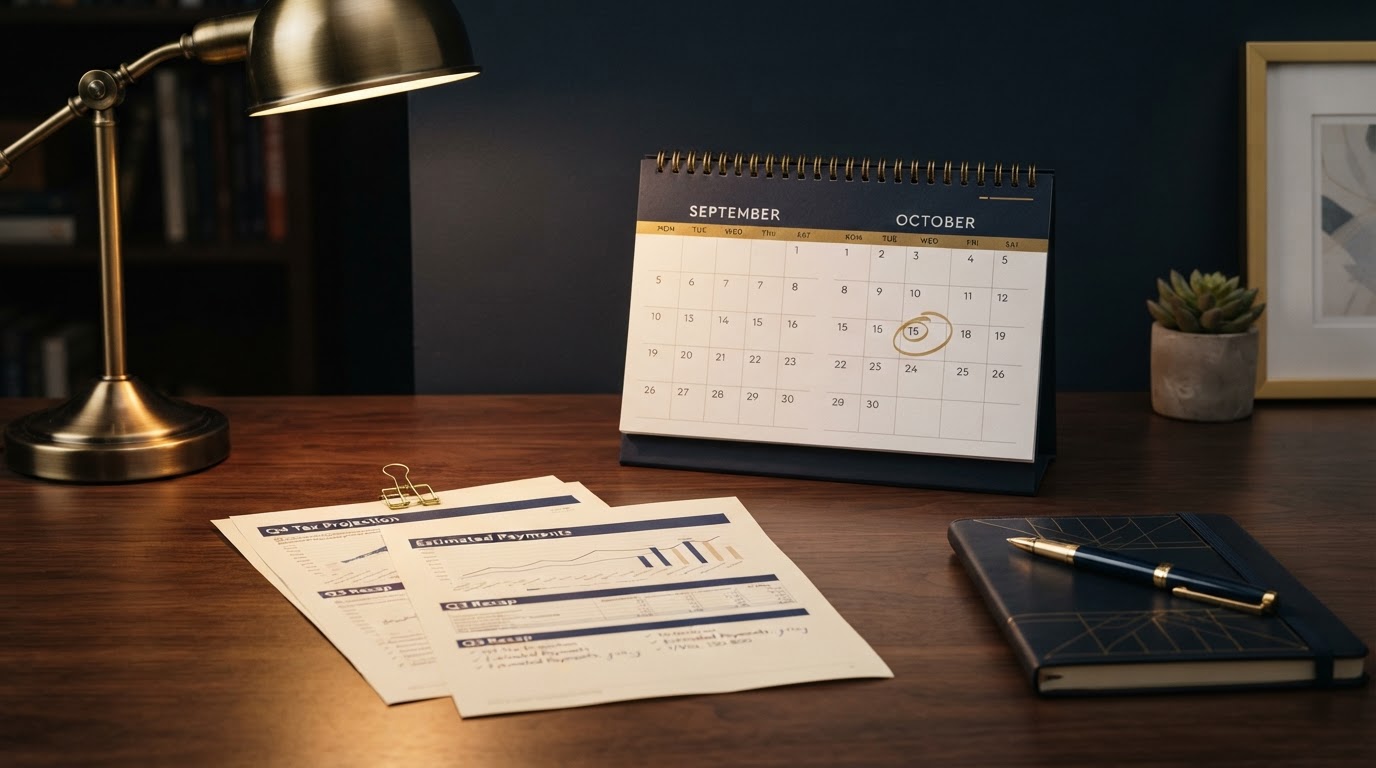
Quarterly estimated payments exist for a reason: taxes don't wait for April. But the value of a quarterly rhythm isn't just avoiding penalties—it's catching the planning moments that disappear once a quarter closes. Four check-ins a year is the sweet spot between constant attention and total neglect.
What a useful check-in actually contains
- A running estimate of where your income stands versus projections
- A look at deductions and credits captured so far, with gaps flagged
- An estimate payment sized to the real picture, not a guess
- Any life or business changes that shift the year's outcome
Notice what's not on the list: a full return. A quarterly check-in is a forecast, not a filing. Its job is to tell you, while there's still time, whether you're on track and what to adjust.
Why quarters, not months or years
Monthly is too frequent for most people and creates noise. Once a year is too sparse to course-correct. Quarters align naturally with estimated payment deadlines, which means the check-in doubles as a decision point: pay the right amount, on time, with confidence it reflects reality.
“An estimate that matches your actual quarter is worth more than a perfect return filed nine months too late to matter.”
The compound effect
On their own, quarterly check-ins feel small. But over a year—or several—they replace surprise with foresight. Instead of discovering a shortfall in April, you've already adjusted. Instead of missing a deduction, you've already documented it. The rhythm is the strategy, repeated until it's just how you operate.
If your tax year currently begins and ends at the filing deadline, a quarterly cadence is the single highest-leverage change you can make. Small, consistent, and timed to the calendar—it's planning made routine.
Have a question about this?
Bring it to a strategy call. We'll review your situation and show you how the ideas here apply to your next move.
Book a consultation